


Disclosure: I am not a medical professional – the below is based on my own experience and research. Please consult your doctor before making any radical lifestyle changes.
It’s coming to that time of year where we all make those well-meaning New Year’s Resolutions. Whether it’s challenging yourself to take on a new hobby, travelling to a new location, or cutting something out that you secretly know you’ll never be able to (she says glaring at chocolate). But what about going gluten-free?
Many choose to make a change to their diet, and with such an improvement in the availability of gluten-free food in supermarkets and restaurants, perhaps you’re thinking of making this change to your diet.
It has to be said, a gluten-free diet isn’t necessarily beneficial for everyone, and comes with both pros and cons. Nevertheless, here a couple of things I think you should know about going gluten-free in 2020!
- The changes you might see from going gluten-free!
- So, with that in mind, here are some things you might want to know about going gluten-free
- You need to speak to a GP first!
- How do you test for Coeliac Disease?
- Do I actually need to go gluten free? How many people are actually gluten-intolerant?
- Is this whole gluten free fad new? Have people always been gluten intolerant?
- How long after going gluten-free will I notice a difference?
- What are the key ingredients I need to avoid by going gluten-free?
- What should my store cupboard essentials be when going gluten-free?
- What is an accidentally gluten-free product?
- Will I lose weight by going gluten-free?
- Can I eat gluten-free out and about?
- Is it possible to travel gluten free?
- Do I have to give up beer when I go gluten free?
- What about other alcohols? Are things like whiskey and gin gluten-free?
- Is there anything else you’d like to know before going gluten free? Let me know in the comments below!!
The changes you might see from going gluten-free!
You might experience less bloating from going gluten free!
I never knew what people meant when they said they felt bloated. I knew what indigestion felt like, but bloating? Not so much. Then I went gluten-free and realised I had just been constantly bloated!

You may see fewer stomach cramps and nausea from going gluten free!
I never really noticed that these were a symptom of my gluten intolerance, and I find it really hard to explain how they stopped. The best way I can describe it is like when you don’t think about the fact that there is a clock in your room because you subconsciously block out the noise of the ticking – however, you notice when the clock had stopped and there’s an unexpected silence.
I never noticed that I often experienced a dull stomach ache after eating things like bread and pasta, and I’d dismissed it as normal to constantly feel a bit…well, bleh.
You might stop getting mouth ulcers from going gluten free!

This is a symptom I didn’t realise was a problem until someone pointed it out to me! I used to suffer quite badly from mouth ulcers, particularly when I’d eaten tangy or sour foods (those fizzy Haribos and pineapple were the main culprits!)
You might experience less brain fog from going gluten free!

I’ve never been a morning person, but I noticed when I went gluten-free that it was like a fog had lifted – I felt a lot more alert and awake. Having said that, I still couldn’t cope on winter morning without my Lumie sunrise alarm*.
You may experience fewer nightmares or night terrors from going gluten free!

I used to suffer quite badly from night terrors – waking up drenched in sweat with my heart racing in panic, sometimes finding myself already sat upright mid shout. My duvet would be flung across the room having been writhing around and I’d actually have to calm myself down and remake my bed before going back to sleep. Even if I didn’t have a full-blown night terror, I did find myself having a LOT of nightmares.
Since going gluten-free, however, I don’t suffer night terrors at all! This is one of the strangest benefits of going gluten-free that I’ve found – if you told me cutting out gluten would stop nightmares I don’t think I would have believed you!
There can be negative side effects too!
Going gluten free isn’t for everyone – if you aren’t noticing any negative side effects from eating gluten filled meals, you could be wasting your time by going gluten free.
Educate yourself on healthy carbs – cutting out gluten does NOT mean going carb-free. Restricting yourself without researching the nutrition of certain food groups first leaves you at risk of not eating enough carbs and fibre.
So, with that in mind, here are some things you might want to know about going gluten-free
You need to speak to a GP first!

If you are suffering one or more of the symptoms I’ve described above, speak to your GP before going gluten-free! You should always do this anyway before starting a radical diet change, but it may be beneficial to start tests for Coeliac Disease before going gluten-free, to avoid any false test results.
Coeliac Disease is an autoimmune digestive condition where your small intestine becomes inflamed in a way that stops it from effectively absorbing nutrients. It can have some long-lasting effects including various deficiencies as well as conditions like osteoporosis. This is why it’s so important to find out if you have the condition or not!
How do you test for Coeliac Disease?

The tests for Coeliac Disease aren’t a barrel of laughs, but they need doing. First, you will need to go back onto eating gluten for about 6 weeks – I was advised when I did it that at least 2 slices of bread should do it, though of course you can take advantage of normal breakfast cereals and convenience foods – enjoy them while you can!
The first test you will have is a blood test that looks for antibodies produced by people with Coeliac Disease. However, not everyone with CD has these in their bloodstream, so some additional tests may be required.
If you experience itchy rashes (called dermatitis herpetiformis), you may be offered a skin biopsy. This involved taking just a couple of punch excisions from an affected area (mine were from my forearm) which are stitched back up – don’t worry, you’ll be given a local anaesthetic.
The final test you may go through is an endoscopy and intestinal biopsy. This will take place in a hospital setting (though you won’t need to be admitted) – a doctor will pass a camera and endoscopic tool down your throat and down into your intestine to look for visible signs of damage caused by Coeliac Disease. They will take a couple of biopsies during this procedure to examine your intestinal lining in a lab.
There are a lot of horror stories and debates surrounding this procedure in gluten-free forums. You will ALWAYS be given a local anaesthetic in the form of a spray to numb your throat, and you will be offered the option to have a sedative to calm you down. You will need to be nil by mouth for around 12 hours before this procedure.
I had my endoscopy and biopsies without a sedative as I wanted to be able to drive afterwards (although a family friend did take me to the hospital – thanks to Erika!) and I kind of wanted to know what was happening to me. Not a barrel of laughs, but I wouldn’t be completely horrified if I ever need to have the procedure again.
All of my tests came back negative, meaning I have something called Non-Coeliac Gluten Sensitivity
Do I actually need to go gluten free? How many people are actually gluten-intolerant?
As I mentioned earlier, not everyone will necessarily benefit from going gluten-free. I found I experienced some positive changes because I’ve presumably always had an underlying gluten intolerance.
It’s estimated that around 1% of the population have Coeliac Disease, but of this only around 30% who have the condition have been diagnosed – that means, according to Coeliac UK, there are currently nearly half a million people who have coeliac disease but don’t yet know.
As for how many people are actually gluten-intolerant? The jury is out – sorry!
A study by Dr. Fasanoat the University of Maryland Center for Celiac Research examined the molecular basis for gluten sensitivity and how it is different from celiac disease. This study estimated that gluten sensitivity affects around 6% to 7% of the US population.
Meanwhile, other health professionals reckon that it could be as much as 50% of the population that could be gluten sensitive.
In my opinion, if you do go gluten-free and feel better, good for you – you don’t need to put a label on it.
Is this whole gluten free fad new? Have people always been gluten intolerant?
Something to know if you’re planning on going gluten free is that you are probably going to be given the title of “snowflake” at some point! The fact is though, although the gluten-free product market has expanded hugely in recent years, society has been aware of problems caused by gluten for centuries!
Celiac disease was first described in A.D. 100 by the Greek doctor Aretaeus – in fact, the word Coeliac comes from the Greek word for abdominal, koiliaki.

A Dutch paediatrician during WW2 noticed that the Nazi induced cut off of vital food supply actually helped expose the damage that wheat was doing to some children in his care – they actually started to get better under rationing, and became ill once more on the occasions they were given some precious bread – read the full story here.
While there is a lot more awareness about gluten intolerance now, you can’t possibly say it’s a bad thing! I recently spoke to a lady living with ME who told me she’d been on a gluten-free diet for about 30 years to help with her condition, and she was ecstatic at how readily available gluten-free food items were nowadays.
How long after going gluten-free will I notice a difference?
The length of time it takes for symptoms to going away after going gluten-free can differ from person to person. For some people it can take a few days – for me it took around 2 or 3 weeks, but it took about 12 weeks for the gluten to be out of my system completely. Some symptoms like the night terrors thing I didn’t notice until a few months after going gluten-free.
What are the key ingredients I need to avoid by going gluten-free?
The main grains that contain gluten are wheat, barley and rye. On top of that, wheat has lots of forms, so you also need to avoid:
- bulgur wheat
- durum wheat
- spelt
- semolina
You will find that most ingredients containing gluten are marked in bold on UK labels, but just in case, you need to take care to avoid foods containing:
- bran
- brewer’s yeast
- brown flour
- couscous
- dextrin
- farina
- hydrolyzed vegetable (wheat) protein,
- malt/ malt extract/ malt syrup/ malt vinegar
- modified starch (unless the source is gluten-free)
- self-raising flour
- soy sauce
- anything described as wholemeal or wholegrain
What are the main foods that tend to contain gluten?
Basically, anything stodgy and delicious! This generally includes, but isn’t limited to:
- bread, bagels & tortillas
- cakes, muffins and pancakes/crepes
- biscuit/crackers
- shop-bought gravy
- pasta
- pizza
- doughnuts
- lots of sausages
- anything glazed or in a sauce
Essentially, in case it isn’t already obvious, if you can’t cook already, you’re going to need to learn to!
What should my store cupboard essentials be when going gluten-free?
If you already cook regularly, you’ll be just fine. A lot of gluten-free products will add a lot to your weekly shop spend, so it’s important to prioritise what you actually need. You don’t HAVE to get everything from the Free From aisle!
The only items in our household we consistently buy from the Free From aisle are gluten-free bread (my faves are Warburtons Gluten-Free and Genius Gluten-Free), gluten-free pasta (also available all over the place), gluten-free soy sauce, and gluten-free stock cubes.
For a lot of store cupboard items though, if you label-read and research online, you can easily find own brand versions that are gluten-free.
A great example is something like honey nut cornflakes – don’t feel the need to buy the expensive gluten-free brand names like the Nestle Go Free ones (coming in at up to £2.30) when you can get the own brand Tesco for £0.75! These are an accidentally gluten-free item, still safe to eat for most people.
What is an accidentally gluten-free product?
You’ll see this term mentioned in Facebook groups a lot – they are products, like the honey nut flakes above, that aren’t necessarily setting out to be a gluten-free item, but don’t have any gluten-containing ingredients or “may contain warnings”. Other examples would be Nutella! Becky Excel has written a great round of up of some great accidentally gluten-free items at Gluten Free Cuppa Tea.
Will I lose weight by going gluten-free?
There seems to be a misconception that you can lose weight by going gluten-free – I wouldn’t necessarily agree. I did see some weight loss in the year that I went fully gluten-free, however, I was training with a PT at the same time.
You need to ensure that by cutting out gluten containing foods, you aren’t leaving yourself at risk of a nutrient-deficient diet – replace those gluten containing foods for alternatives. For example, swapping normal egg noodles with rice.
Admittedly, going gluten-free means you can’t rely quite as much on fast food or ready meals. I found I was generally a little bit more aware of what I was putting in my body, which helped a bit – I lost 2 stone over the space of a year, my weight has plateaued since.
It is important to be aware however if you do want to go gluten-free for weight loss, that typically gluten-free bread, cookies, cakes etc are actually higher in fats and sugars (to make them taste half decent!) – so if you’re continuing to eat sweet stuff, of course you won’t lose weight.
You could actually see yourself GAINING weight by relying on those fat and sugar filled products. If you do have coeliac disease, you could also see some weight gain as your intestinal damage starts to heal as you will actually begin to absorb nutrients properly.
Overall, wanting to change your weight is not a good reason for going gluten free.
Can I eat gluten-free out and about?
As you can’t rely on fast food, eating out on day trips and holidays can require some forward planning. Thankfully, loads of franchise restaurants in the UK offer gluten-free menus now – even the likes of Wetherspoons offer some gluten-free options (though I’d argue not the safest or highest of standards!) It’s worth getting a Tastecard* or Gourmet Society Card* to take advantage of discounts on a lot of major franchises.
You can find loads of gluten-free restaurant reviews on my blog!
- Gluten Free Self Catering in Spain
- Eating Gluten Free Afternoon Tea at Marella Cruises’ Great Musical Afternoon Tea
- Ad // Vegan & Gluten Free Afternoon Tea at Liverpool’s Titanic Hotel
- My London foodie wishlist // Ad
- Gluten Free Date Locations for Valentine’s Day in Liverpool
A note to remember – fried items are rarely gluten-free! And if you do see chips or fries included on a gluten-free menu, please ask your server to find out if they are done in the same fryer or oil as gluten-containing fried items! If they are, best not to risk eating them.
Honestly? From time to time you may end up pretty stuck if you find yourself with only a corner shop to rustle together a lunch from. Get used to planning ahead and packed lunches. I used to work in a small village with only a corner shop in walking distance that definitely didn’t cater for gluten-free – I’ve also ended up staying in unfamiliar places for work where I didn’t fancy wandering streets in the dark and had to rely on Uber Eats and their questionable takeaways.
So, my ultimate tips for if you’re in a pickle with no recognisable restaurants nearby:
- Carry some protein bars or breakfast biscuits in your bag – I like the Nairn Biscuit Breaks*
- McDonalds fries and hash browns are gluten-free. As are the goujons in the Veggie Deluxe (ordering McDonalds burgers without a bun can sometimes be a lifesaver)
- When in doubt, fruit is gluten-free. Lots of pre-packed supermarket salads however, aren’t (especially those containing pasta and croutons)
Relying on vending machines? Most Seabrooks crisps are gluten-free. Also Metcalfe’s popcorn. Sorry, you’re not really getting anything more substantial there.
Is it possible to travel gluten free?
Of course! That’s what this whole blog is about! My top tips for travelling gluten free would be:
- Take some biscuits bars/protein bars in your luggage so you can always have an emergency snack with you out and about
- Communicate with your travel agent, airline and hotels before you travel and ask for your dietary requirements to noted on your booking details.
- If you are staying in a hotel or on a cruise, ask to speak to the hotel manager on arrival to establish where you can eat.
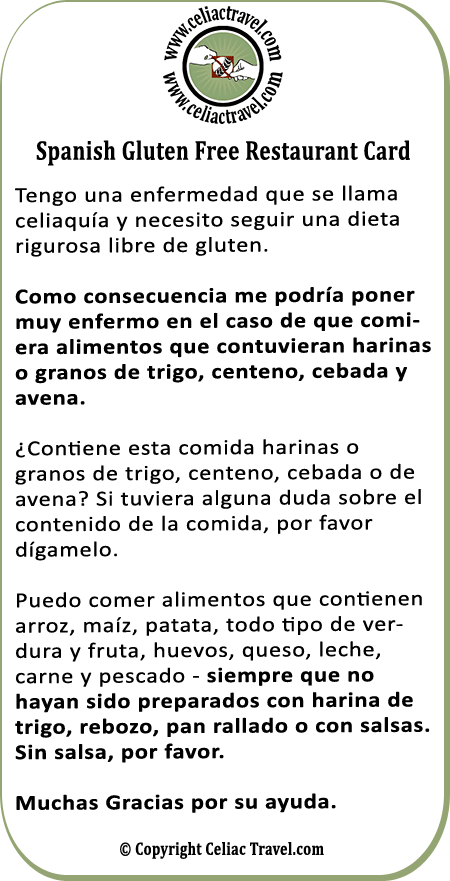
- Get some travel cards or have some on your phone explaining your dietary requirements in different languages – I always have the ones from celiactravel.com on my phone! Below you can see an example of a Spanish gluten free restaurant card – they really are a lifesaver and have helped me lots when eating gluten free in Torremolinos.
- Self catering can be a life saver! If you aren’t comfortable dealing with language barriers and hotel buffets, self catering is a safe option and puts you in total control. Cooking naturally gluten free foods is your best option, although some foreign supermarkets have some great gluten free ranges. Check out my post on gluten free self catering in Spain!
I most commonly go on cruises rather than land holidays, and have had some great experiences of gluten free cruising!
- Cruising Gluten Free on P&O Cruises
- Cruising Gluten Free on Sapphire Princess
- Cruising Gluten Free on Holland America Eurodam
- Cruising gluten free on Marella Spirit (Ship no longer in service)
- Eating gluten free on CMV Magellan (Ship no longer in service)
- A first glimpse of gluten free treats on Virgin Voyages
- A gluten free guide to Scarlet Lady’s restaurants (Virgin Voyages Menus)
- Eating Gluten Free Afternoon Tea at Marella Cruises’ Great Musical Afternoon Tea
- Eating gluten free on Marella Explorer 2
Do I have to give up beer when I go gluten free?
Yes and no – by nature beer, lagers, stouts and ale do contain gluten. You’ll need to say goodbye to the old favourites and find some new ones.
Luckily when it comes to beers and ales, there are a selection of gluten-free products available – whilst you may still struggle when on a night out, there’s no reason to miss out when you’re sat in front of the TV at home!
Some of the gluten-free beer and ales you most commonly find available in bars, pubs and restaurants in the UK include Peroni Nastro Azzuro Gluten-Free, Daura Damm, Estrella Galicia gluten-free and San Miguel Gluten Free.
Luckily, the gluten-free aisles of supermarkets offer plenty! I’ve built a list on Amazon to help you find some gluten-free beers and ales to try!*
What about other alcohols? Are things like whiskey and gin gluten-free?


Luckily alcohols such as cider, wine, sherry, spirits, port and liqueurs are pretty much always gluten-free. I’ve written a lot before about some of my favourite gluten-free gins.
The bit that may catch you out on nights out is cocktail ingredients like syrups – it’s best to ask to see allergen menus before ordering an unusual sugary boozy concoction.
Is there anything else you’d like to know before going gluten free? Let me know in the comments below!!


